
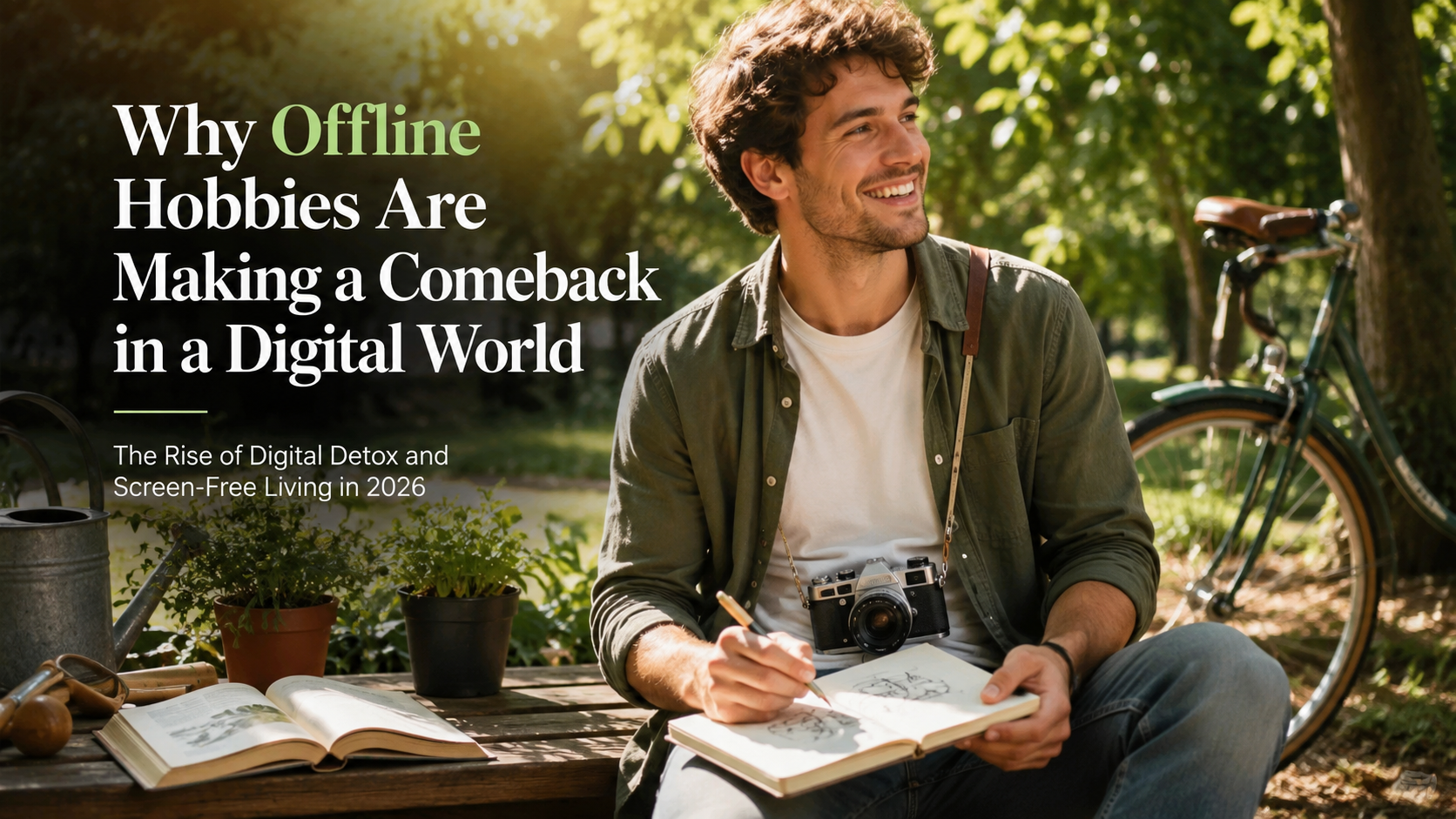
A decade ago, most conversations about entertainment revolved around streaming platforms, social media, and the latest apps. In 2026, a different lifestyle shift is gaining attention as more people dedicate time to activities that exist entirely away from screens. From gardening and painting to reading and hiking, offline hobbies are attracting people who want something more meaningful than another hour spent scrolling.
This renewed interest is not about rejecting technology. Instead, it reflects a growing desire to create balance in a world where digital devices are involved in almost every part of daily life. As concerns about screen fatigue continue to grow, many adults are turning to screen free activities that help them relax, focus, and reconnect with their surroundings.
Why Offline Hobbies Are Trending in 2026
The popularity of offline hobbies has increased alongside conversations about wellness, productivity, and personal fulfillment. Many people now recognize that spending every free moment online can feel exhausting rather than refreshing. As a result, activities that encourage creativity and concentration are becoming more attractive than passive digital entertainment. According to discussions featured on alphainsider.co.uk more individuals are intentionally making room for hobbies that help them disconnect from constant digital stimulation.
Recent lifestyle trends also show that people are placing greater value on experiences that feel genuine and memorable. Instead of consuming endless content, they are investing time in hobbies that provide a sense of progress, enjoyment, and personal achievement. This change is helping offline hobbies move from occasional pastimes to regular parts of everyday life.
The Growing Interest in Digital Balance
One of the biggest lifestyle priorities in 2026 is finding a healthier relationship with technology. While smartphones and digital tools remain essential, many individuals are creating boundaries that allow them to disconnect for certain parts of the day. This approach supports both productivity and personal well-being without requiring a complete break from technology.
The idea of a digital detox has become more practical and flexible than it was a few years ago. Rather than disappearing offline for days at a time, people are introducing small habits that reduce screen exposure and create more opportunities for real-world experiences.
Why Real-World Experiences Feel More Valuable Today
As daily life becomes increasingly digital, experiences that involve physical interaction often feel more rewarding. Completing a painting, planting flowers, or finishing a woodworking project creates a sense of accomplishment that many online activities cannot easily replicate. These experiences leave people with something tangible to appreciate long after the activity ends.
Many adults are also seeking moments that encourage full attention. Offline hobbies allow individuals to focus on one task at a time rather than constantly switching between messages, videos, and notifications. This focused engagement is one reason these activities continue to gain popularity across different age groups.

The Appeal of Creating Something Tangible
Creating something with your own hands offers a unique type of satisfaction. Whether it is a handmade craft, a home-cooked meal, or a thriving garden, the result feels personal because it reflects time, effort, and creativity. That sense of ownership often makes the experience more meaningful than consuming digital content.
This desire for tangible outcomes is influencing how people spend their leisure time. Instead of looking for instant entertainment, many individuals are choosing activities that allow them to learn skills and produce something they can see, use, or share with others.
The Offline Hobbies Adults Are Embracing Right Now
The growing interest in hobbies for adults is creating renewed enthusiasm for activities that were once considered traditional. These hobbies are attracting people from different backgrounds because they offer relaxation, creativity, and opportunities to step away from screens. Many of them require little more than curiosity and a willingness to try something new.
At the same time, communities built around these hobbies are becoming stronger. Local workshops, hobby clubs, and social gatherings are helping people connect through shared interests. This social aspect is making offline hobbies even more appealing in a world where many interactions take place online.
Creative Activities Are Gaining Momentum
Creative hobbies continue to attract people looking for an enjoyable break from digital routines. Activities such as painting, pottery, knitting, and journaling encourage self-expression while providing a calming and productive way to spend free time.
Outdoor Pursuits Continue to Grow
Outdoor activities are also becoming increasingly popular among people seeking fresh air and a change of scenery. Spending time in nature often helps reduce stress while encouraging movement and exploration beyond the screen.
Reading and Community-Based Hobbies
Reading physical books, joining book clubs, and participating in local interest groups remain popular choices. These activities combine learning and social interaction while helping people spend less time online.
Popular offline hobbies in 2026 include:
- Gardening and home growing
- Painting, sketching, and crafts
- Reading printed books
- Hiking and cycling
- Cooking and baking
- Photography and journaling
How Offline Hobbies Help Reduce Screen Time
Many people struggle to reduce screen time because digital entertainment is always available. Offline hobbies offer a practical alternative by replacing passive scrolling with activities that require participation and attention. Instead of consuming content, individuals become active participants in what they are doing.
Over time, these habits can create healthier routines. Even setting aside thirty minutes each day for an offline activity can help break the cycle of constant screen use. Small changes often have a noticeable impact on focus, mood, and overall satisfaction.
Latest Lifestyle Trends Driving the Digital Detox Movement
The digital detox movement has evolved into a broader lifestyle trend focused on creating balance. Rather than treating technology as the problem, many people are choosing to be more intentional about when and how they use it. This mindset is influencing everything from daily schedules to weekend plans.
Lifestyle experts have observed growing interest in activities that encourage mindfulness, creativity, and face-to-face interaction. As a result, screen free activities are becoming a regular part of wellness routines rather than occasional experiments.
Screen-Free Weekends Are Becoming More Popular
Many individuals are setting aside specific periods during the week when they limit phone use and focus on hobbies, family activities, or outdoor recreation. These breaks provide an opportunity to recharge and spend time more intentionally.
Mindful Living Is Influencing Daily Habits
People are becoming more selective about how they spend their attention. This shift is encouraging habits that promote presence and engagement instead of constant digital consumption.
Some popular digital detox habits include:
- Keeping phones away during meals
- Reading before bed instead of scrolling
- Scheduling screen-free evenings
- Spending weekends outdoors
- Joining local hobby groups
What Businesses and Brands Are Noticing
The return of offline hobbies is creating opportunities across multiple industries. Retailers that sell craft supplies, gardening products, books, and outdoor equipment are seeing increased interest from consumers who want to support their new hobbies. As noted in lifestyle coverage from elle.com this demand reflects broader changes in lifestyle preferences and consumer behavior.
Businesses are also adapting their marketing strategies to focus on experiences rather than products alone. Many brands now emphasize creativity, well-being, and community involvement because these themes align with what consumers are seeking in 2026, a trend that Elle.com has also explored in discussions about modern lifestyle choices.
What Could Happen Over the Next Few Years?
Current trends suggest that offline hobbies will remain an important part of modern lifestyles. As people continue looking for balance between digital convenience and personal well-being, activities that encourage creativity and engagement are likely to attract even more attention.
The future may bring a stronger connection between online inspiration and offline participation. People will continue discovering hobbies through digital platforms while spending more time practicing them in the real world. This combination could shape leisure habits for years to come.
Hybrid Lifestyles Will Continue to Expand
Rather than choosing between online and offline experiences, many people will combine both. Technology will remain useful for learning and communication, while hobbies provide opportunities to disconnect and recharge.
Local Hobby Communities May Become Stronger
Community-based activities are expected to grow as people seek meaningful social experiences. Local clubs, workshops, and events may become increasingly important for building connections and sharing interests.
Experts expect these developments to continue:
- More hobby-focused community events
- Greater interest in creative skills
- Increased participation in outdoor recreation
- Wider adoption of digital detox habits
Practical Ways to Get Started
Starting a new hobby does not require expensive equipment or major lifestyle changes. The best approach is often to choose something enjoyable and commit a small amount of time each week. Consistency matters far more than perfection when building a new routine.
Many people discover that once they begin spending time on offline activities, they naturally spend less time on their phones. The experience feels rewarding because it creates memories, skills, and achievements that extend beyond a screen.
Simple ways to begin include:
- Reading a physical book each evening
- Growing herbs or flowers at home
- Taking daily walks without a phone
- Learning a musical instrument
- Joining a local class or workshop
The Return to Real-Life Moments
The growing popularity of offline hobbies reflects a larger shift in how people want to spend their free time. As digital devices become more integrated into everyday life, many individuals are actively creating space for activities that encourage creativity, focus, and genuine enjoyment. These hobbies provide an opportunity to slow down and engage with the world in a more meaningful way.
Whether it is gardening, painting, reading, or exploring the outdoors, offline hobbies offer experiences that feel refreshing in an always-connected environment. As more people embrace digital detox habits and look for ways to reduce screen time, these activities are proving that some of the most rewarding moments still happen away from a screen.
Frequently Asked Questions
As interest in offline hobbies continues to grow, many people have questions about how these activities fit into modern lifestyles. From reducing screen time to finding the right hobby, the answers often depend on personal goals and preferences. The following questions address some of the most common concerns surrounding this growing lifestyle trend in 2026.
Why are offline hobbies becoming popular again?
Offline hobbies are becoming more popular because many people are looking for ways to create balance in a technology-driven world. Activities such as gardening, reading, and painting provide opportunities to disconnect from screens while focusing on something enjoyable and productive. They also support relaxation, creativity, and personal well-being.
How do offline hobbies help reduce screen time?
Offline hobbies naturally replace hours that might otherwise be spent scrolling through social media or consuming digital content. By engaging in activities that require attention and participation, people spend less time looking at screens. Over time, these habits can help create a healthier relationship with technology.
What are the best offline hobbies for adults?
Some of the most popular hobbies for adults include gardening, reading, hiking, cooking, photography, and various creative arts. The best choice depends on individual interests, available time, and personal goals. Many people start with simple activities and gradually explore new hobbies as their interests grow.
Can offline hobbies support mental well-being?
Many offline hobbies encourage focus, creativity, and relaxation, which can help people feel less overwhelmed by constant digital activity. Activities that involve nature, art, or hands-on projects often provide a sense of accomplishment and satisfaction. This is one reason they are becoming an important part of many wellness routines.
Is a digital detox possible without giving up technology completely?
Yes, a digital detox does not require eliminating technology from daily life. Most people simply create boundaries around when and how they use digital devices. Combining screen-free activities with mindful technology use allows individuals to enjoy the benefits of both online and offline experiences.